
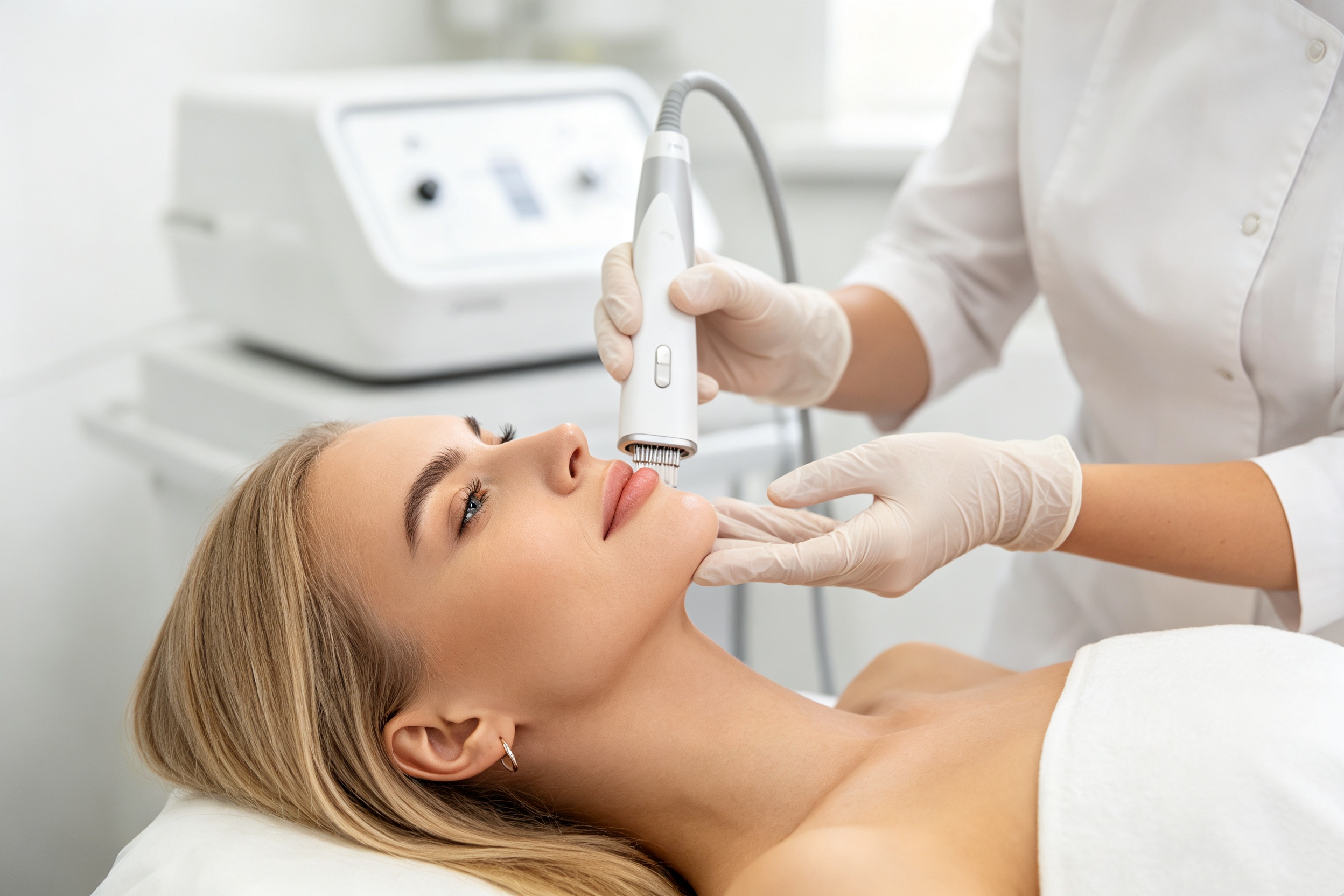
Radio Frequency (RF) microneedle technology has become an important technology in the professional medical aesthetics equipment field. It combines controllable RF energy with microneedle therapy, enabling precise treatment at different depths. As medical aesthetics clinics, medical beauty service providers, distributors, and equipment manufacturers widely adopt this technology, the demand for reliable treatment probes, handles, cables, and replacement parts in the market has also increased.
For professional equipment manufacturers, the commercial feasibility of the radio frequency microneedle system largely depends on the stable supply of high compatibility consumables and replacement parts – these factors directly affect the operational stability of the equipment, the speed of maintenance response, and the satisfaction of end users.
APEX TECHNOLOGIES fully grasps this industry dynamic; we are not merely a parts supplier, but a strategic partner in your after-sales service ecosystem. We offer readily available stock for the full range of RF microneedling components, flexible bulk purchasing options, and comprehensive OEM customization—spanning everything from specifications to packaging—to ensure your equipment receives reliable, long-term support throughout its entire lifecycle.
Understanding the RF Microneedling System
An RF microneedling system is more than a console and treatment handpiece. The performance of the complete system depends on how the machine, handpiece, cartridge, electrical connection, and control components work together.
Among these components, the treatment probe is one of the most important consumables. Different radiofrequency micro-needle platforms may adopt different needle configurations, insulation structures, connector designs and treatment depths. Even if two probes have similar appearances, their mechanical or electrical interfaces may still differ.
This is why professional sourcing should begin with the complete system rather than with the cartridge alone.
The machine model, handpiece, cartridge, connector, and electrical configuration should be considered as one system when selecting replacement components.
RF Microneedling Needle Cartridges
Needle cartridges are at the center of many RF microneedling treatments and represent one of the most frequently replaced components in the equipment supply chain.
Depending on the system, cartridges may feature different needle quantities, needle arrangements, insulation structures, materials, dimensions, and connection methods. Some systems use insulated or semi-insulated needles, while others use non-insulated configurations. The choice is determined by the RF delivery system and the design of the corresponding handpiece.
Leading RF microneedling platforms also distinguish between treatment tips according to treatment area and application. For example, Cutera’s Secret RF uses 25-pin and 64-pin treatment tips, demonstrating how cartridge configuration can be integrated into the overall treatment concept rather than treated as a standalone accessory.
For distributors and OEM buyers, the most important consideration is therefore not simply the number of needles. The cartridge must provide the correct mechanical fit, electrical connection, needle structure, and operating characteristics for the intended machine.
Insulated and Non-Insulated Needle Technology
Needle insulation is an important part of RF microneedling technology because it influences where RF energy is delivered.
With insulated or semi-insulated needles, selected sections of the needle are coated while the designated treatment area remains exposed. This allows the RF energy delivery to be more specifically controlled. Non-insulated needles use a different electrode structure and can deliver energy along a larger portion of the needle.
Professional systems may offer different needle configurations according to treatment requirements. Cutera, for example, describes Secret RF as supporting both semi-insulated and non-insulated microneedles and adjustable penetration depths, allowing the platform to be configured for different applications.
For parts suppliers, this means that needle construction should always be considered together with the machine’s RF architecture. A cartridge that is mechanically similar to another product is not necessarily electrically compatible.
Compatibility Is the Starting Point
In the RF microneedling parts business, compatibility is often more important than appearance.
The replacement cartridges or handles may look almost exactly the same as the original components in appearance, but their connectors, pin configurations, cable structures or internal electrical designs may differ. This could cause problems during installation and result in unnecessary returns or equipment downtime.
A professional sourcing process should therefore identify the machine model first, followed by the handpiece and cartridge configuration. Original product photos, dimensions, part numbers, connector details, and technical drawings can make this process much more accurate.
For distributors working with multiple aesthetic equipment brands, this becomes particularly important. A reliable supplier should be able to evaluate the component as part of the complete RF microneedling system rather than simply matching products by appearance.
RF Microneedling Handpieces and Treatment Components
The handle is the connecting component between the radio frequency microneedle device and the treatment probe. Depending on the architecture of the device, it may also incorporate mechanical devices responsible for the movement of the needle, depth control, and energy transmission.
With continued use, handpieces can eventually require replacement because of mechanical wear, cable damage, connector problems, or other component failures. For this reason, replacement handpieces are an important part of the professional RF microneedling spare-parts market.
When selecting a replacement handpiece, compatibility with the machine and cartridge should be confirmed together. Cable length, connector structure, cartridge interface, housing dimensions, and internal configuration may all influence whether a handpiece can be used correctly.
A high-quality replacement is therefore not simply a product that looks like the original. It should be designed or selected according to the technical requirements of the equipment platform.
Cables, Connectors and Electronic Components
Although cables and connectors are less visible than the treatment handpiece, they are essential to the stability of the equipment.
Repeated movement, bending, plugging and unplugging, and long-term operation can place stress on cables and connection points. Handpiece cables, foot-pedal connections, power cables, internal wiring, adapters, and other connectors may eventually need replacement.
The same principle applies to electronic components. Depending on the equipment design, replacement requirements may include control boards, motor-related components, RF control components, cooling-control components, screens, fuses, and other internal parts.
For these products, accurate identification is particularly important. Machine model information, original part numbers, clear photographs, and technical specifications can significantly reduce the risk of supplying an incorrect component.
Why Consumables Matter to RF Microneedling Distributor?
For distributors, RF microneedling equipment creates a business relationship that can continue long after the initial machine sale.
Once a machine is installed in a clinic, treatment cartridges and other consumables may generate repeat orders. Replacement handpieces, cables, connectors, and electronic components can also become part of the equipment’s long-term after-sales requirements.
This makes consumables and spare parts an important part of the total value of an RF microneedling equipment business.
A distributor that can provide the machine together with reliable access to compatible cartridges and replacement parts is better positioned to support customers throughout the equipment lifecycle.
What Professional Buyers Should Look for in a Supplier?
The right RF microneedling parts supplier should offer more than a competitive unit price.
Product consistency is fundamental. Needle alignment, cartridge assembly, connector quality, dimensions, packaging, and batch consistency can all influence the reliability of repeated orders. For distributors, consistency is particularly important because customers expect replacement products to perform in the same way as previous orders.
Supply stability is equally important. The supplier should be capable of supporting regular purchases, repetitive orders, reasonable delivery cycles, and various order sizes. This enables the distributor to maintain its own inventory and respond more promptly to customer demands.
Technical support also adds significant value. When a buyer provides a machine model, original cartridge, handpiece photograph, or connector information, the supplier should be able to help identify the appropriate component before production or shipment.
For OEM customers, the relationship can extend further. Product appearance, labeling, packaging, cable configuration, cartridge specifications, and other details may be customized according to the project.
A More Efficient Way to Source RF Microneedling Spare Parts
The most efficient RF microneedling sourcing process starts with technical information.
When buyers inquire about RF (Radio Frequency) microneedle therapy heads, in addition to directly asking about the price, they can also provide information such as the brand and model of the equipment, photos of the original treatment head and handle, details of the connectors, the required quantity, and any OEM specification requirements.
After obtaining this information, the suppliers can first confirm the compatibility, and then discuss matters such as product specifications, sample production, price, packaging, and production requirements.
This approach reduces unnecessary back-and-forth and helps both sides establish the correct product before moving to larger orders.
RF Microneedling Parts for Long-Term Equipment Support
A professional RF microneedling system depends on the complete supply chain behind it. Treatment cartridges, handpieces, cables, connectors, and electronic components all contribute to equipment availability and long-term service.
For distributors, wholesalers, repair companies, and OEM equipment manufacturers, sourcing should therefore focus on more than a single component or a single purchase.
The right combination of compatibility, product consistency, supply stability, and technical support can make RF microneedling parts a reliable extension of the equipment business.
APEX TECHNOLOGIES supplies RF microneedling cartridges, handpieces, cables, accessories, and replacement components for professional equipment businesses. We support standard products as well as wholesale and OEM projects.
If you are sourcing RF microneedling parts, send us your machine model, original product photos, required quantity, and specifications. Our team can help identify the appropriate component and discuss the most suitable supply solution for your market.